Dental
Implants 
Medisave funds can be used for
dental
implants, with up to $950 per implant.
If a tooth is lost, our biting function will
be compromised. If the
tooth is not replaced, the adjacent teeth may move or drift into the
space. This can cause gum
problems, imbalances in biting and possibly jaw joint
problems or muscle pains.
Previously, dental options were limited to dentures or bridges. Now with
dental research and development, it is possible to replace
teeth with implants.
What are Dental Implants?
These are titanium
pillars that are surgically placed in the missing tooth space. After
implantation, the bone will integrate with the titanium and it is then
possible to construct a crown
or bridge on top of the implants.
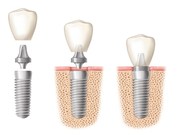

The advantages of an implant are the increased biting forces possible
compared to either a denture
or bridge. There is also no need to trim the adjacent teeth to place
the implant thereby preserving your own sound teeth.
Learn
more about dental implants here
How are Dental Implants done?
In some instances, implantation can be done immediately after removing
the compromised tooth. Other times, it will be necessary to wait a few
months to allow the bone to heal first.
Before treatment the dentist will complete a
thorough oral
examination and take an x-ray to ascertain if you are suitable for the
dental implant procedure.
After consultation on dental implants, the
procedure will be
done under local anesthesia. Post surgery, you will need to wait for
approximately one to four months for the bone to bond to the dental
implant. You will have temporary replacement teeth put in place after
this procedure.
A crown will be attached to the dental
implant. Once completed, natural looking, strong and functional teeth
will be restored.
When can I resume my normal activities?
Most patients can go back to their normal daily activities within the
same day of the dental implant procedure.
Is the dental implant procedure
painful?
The dental implant procedure is painless as
it is performed under a
little local aesthesia. After the procedure you will have to take
medication to ensure a painless recovery.
How do I take care of my dental
implants?
Dental implants should be maintained just
like real teeth, through
daily flossing, brushing and regular dental check-ups. Follow-up visits
will be needed to make sure the dental implants, teeth and gums are
healthy.








 EMF
EMF
 Tel: +65 6226 2296
SMS/Whatsapp: +65 9298 7982 Email:
service.adc@outlook.com
Tel: +65 6226 2296
SMS/Whatsapp: +65 9298 7982 Email:
service.adc@outlook.com


